

In methadone clinics, nurses aren’t just caregivers – they’re also the final checkpoint for safety, compliance, and dose verification. Every day, they batch bottles, supervise dosing, verify seals, and manage patient interactions – all while working under pressure.
But in clinics that still use heat-seal systems, nurses face unnecessary risks: burns, equipment malfunctions, repetitive strain injuries, and the frustration of fixing failed seals. These aren’t just workplace nuisances – they’re preventable hazards.
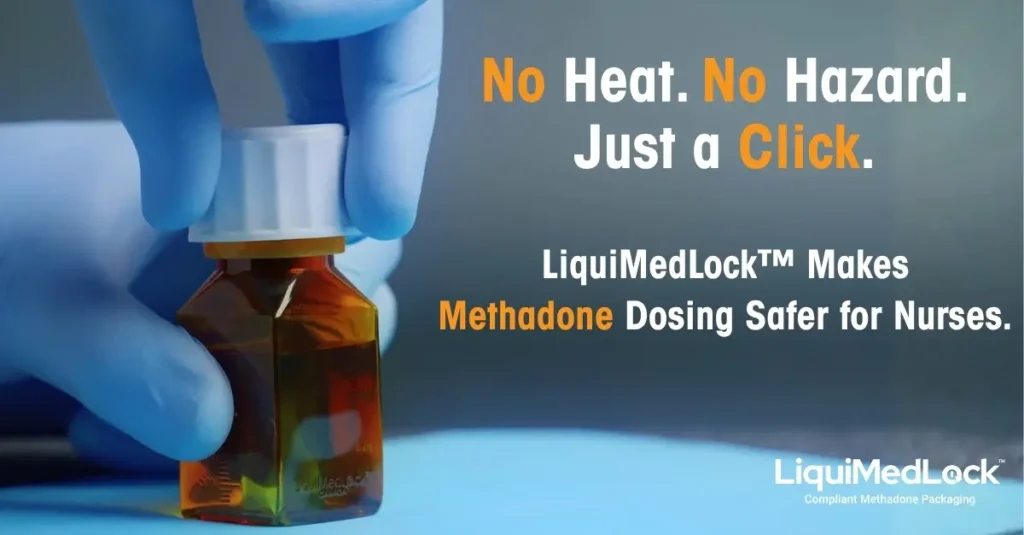
LiquiMedLock was designed to eliminate those hazards. With its one-step click-lock closure and tamper-evident cap, it removes heat sealing from the workflow entirely – making methadone dispensing safer, faster, and more reliable for nurses.
This article explores the risks of heat sealing, how LiquiMedLock improves staff safety, and why MAT programs are making the switch.
The Hidden Risks of Heat-Sealing Systems
Heat sealing is still used in many MAT clinics, especially those relying on foil-lined caps or multi-piece closures. But these systems come with serious downsides for staff – especially nurses.
- Burn Hazards
Heat guns and sealing plates reach temperatures above 300°F (150°C). Even minor contact can result in:
- Hand and finger burns
- Singed gloves or clothing
- Equipment-related accidents during shift changes
In fast-paced dosing environments, these injuries are more common than reported.
- Equipment Failure or Variability
Heat sealers can malfunction or produce inconsistent results:
- Underheating leads to loose seals
- Overheating can melt or deform caps
- Machines need warm-up and cool-down periods, delaying workflows
When sealing fails, nurses must spend extra time replacing caps, cleaning up leaks, or re-dosing patients.
- Ergonomic Strain
Holding heat guns for extended periods – especially in large batching sessions – creates repetitive strain on wrists, hands, and shoulders. - Bottlenecks During Batching
Sealing machines create workflow interruptions. When only one machine is available, it becomes the bottleneck in high-volume batching processes, forcing nurses to queue or rush.
How LiquiMedLock Makes Dosing Safer for Nurses
LiquiMedLock replaces heat sealing with a one-step click-lock system that removes heat – and its hazards – from the equation.
Key safety features:
- No heat source required – completely eliminates burn risk
- One-twist closure – caps seal securely with a simple motion
- No foil or liner alignment – fewer manual steps = less strain
- Pre-matched bottles and caps – no sorting or searching
- Textured cap ridges – improved grip for gloved or damp hands
This dramatically reduces the physical and environmental stress placed on nurses during batching and handoffs.
Faster, Safer Workflows
In clinics that batch hundreds of doses daily, even small improvements make a big impact. LiquiMedLock:
- Saves six seconds per bottle in sealing time
- Reduces rework due to failed or loose seals
- Allows multiple staff to batch simultaneously without waiting for heat equipment
- Keeps the workspace cooler, cleaner, and safer
Nurses can focus on patient care – not managing fragile, outdated sealing systems.
Improving Shift-to-Shift Consistency
Heat sealing often creates variability between shifts:
- Some staff apply more torque or heat than others
- Seals may pass inspection during batching but fail during handoff
- Inconsistent sealing increases staff frustration and patient complaints
With LiquiMedLock, every cap clicks the same way. The audible and tactile “click” confirms a proper seal – no guessing, no variability.
This consistency supports better teamwork, documentation, and trust across nursing staff.
Supporting Nursing Retention and Satisfaction
Nursing burnout in MAT programs is real. When the tools nurses use daily are frustrating, dangerous, or prone to failure, job satisfaction suffers.
By removing heat sealers from the workflow, LiquiMedLock:
- Reduces physical strain and repetitive motions
- Eliminates equipment delays during peak hours
- Provides a clean, secure closure system that nurses trust
Nurses report improved confidence in bottle integrity and fewer sealing-related issues after switching to LiquiMedLock.
Better Tools Lead to Better Care
When nurses don’t have to worry about:
- Fixing sealing equipment
- Checking questionable seals
- Cleaning up leaks
- Re-training staff on foil cap procedures
– they’re free to focus on what matters most: patient safety, care, and recovery.
LiquiMedLock doesn’t just eliminate risks – it enhances the clinical environment by simplifying the routine tasks that carry outsized consequences when done wrong.
Real-World Use Cases
LiquiMedLock is already used in settings where nurse safety is non-negotiable:
- Correctional facilities, where secure, tamper-proof sealing is critical
- Public health programs, where mobile teams batch on the move
- Hospital-based MAT clinics, where dosing volume and pace are high
- Rural outreach programs, where space and equipment are limited
Across these environments, LiquiMedLock has reduced time loss, injury risk, and sealing variability.
Easier for New Nurses, Float Staff, and Cross-Coverage
In programs with rotating or contract nurses, simplified sealing procedures are a major asset.
LiquiMedLock:
- Requires no special equipment or training
- Can be mastered in seconds
- Offers immediate feedback (click) that a seal is secure
- Prevents mismatched caps or improper liner placement
Whether it’s a new hire or a float nurse covering an unfamiliar site, the LiquiMedLock system eliminates the learning curve.
No Tools. No Heat. No Compromise.
LiquiMedLock delivers the safety nurses want and the consistency clinics need:
| Traditional Heat Sealing | LiquiMedLock Click-Lock |
| Burn risk from hot tools | No heat sources at all |
| Requires warm-up and cooldown | Ready to seal immediately |
| Machines may jam or overheat | No mechanical components |
| Torque varies between staff | Click confirms seal every time |
| Rework from loose or melted caps | Leakproof seal built into closure |
Twist. Click. Lock. Done.
Nurses shouldn’t have to risk burns or deal with faulty seals to deliver care. LiquiMedLock provides a safer, simpler way to batch and dispense methadone – no tools required.
Request your free 15-bottle sample at https://liquimedlock.com/pages/free-sample and protect your team while improving your workflow.

