

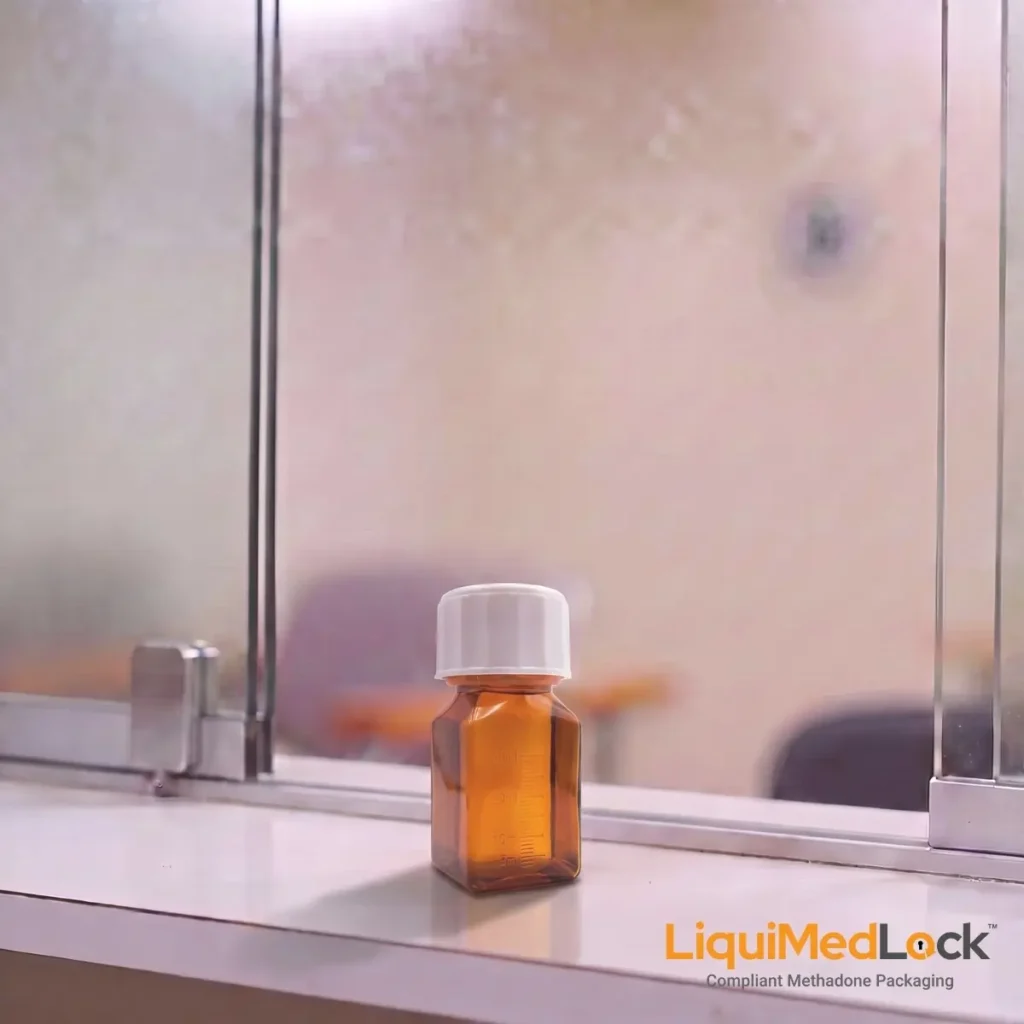
Last month we wrote about the window. The one most methadone clinics have, small and sometimes enclosed, where a nurse spends her shift knowing every patient’s name and carrying more than most job descriptions admit to.
We said we wanted to give some of that care back. This month, we want to show you what that actually looks like.
Care Isn’t a Slogan. It’s a Design Decision.
It’s easy to put “we care about our nurses” on a webpage. It’s harder to sit down and ask what, specifically, makes a shift heavier than it needs to be, and then go change it.
So that’s what we did. We spent time in clinics watching the parts of the job nobody puts in a job posting. The re-check after capping, just to be sure. The extra few seconds spent on every single bottle, multiplied by three hundred a day.
What Six Seconds Adds Up To
LiquiMedLock’s one-step tamper-evident closure removes the re-check entirely. You twist, you hear the click, you know it’s sealed. No second look.
On its own, that’s a few seconds saved per bottle. Across a full shift, in a clinic filling hundreds of doses a day, that adds up to real time back. Time that goes to the person standing in front of you.
Built By Watching, Not Guessing
We didn’t design this closure from a boardroom.
The ergonomic ridges on the cap were shaped for gloved hands. The tamper band is bright enough to verify at a glance, even over a shaky telehealth connection. None of these were our ideas first. They came from nurses telling us, directly, what the job actually required.
The Same Care, Built Into the Tools
If you’d like to see it for yourself, we’ll send your team fifteen bottles at no cost. Just your own workflow, your own shift, your own read on whether it actually helps.

